
Ford 7.3L Godzilla Engine Specs, Problems, Reliability, Info
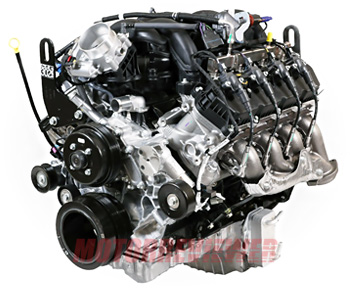
7.3L V8 Godzilla Info
The Ford 7.3L Godzilla is a 7.3-liter naturally aspirated gasoline V8 engine developed by the Ford Motor Company and introduced first for the 2020 Super Duty lineup. This V8 is part of the Godzilla engine family, together with the 6.8L version. The Godzilla engines are intended to replace old big-displacement Modular engines such as the 6.2L Boss V8 or 6.8L Triton V10 engine that Ford has used since 1997. The 7.3L Godzilla is an all-new OHV pushrod engine with variable camshaft timing and port fuel injection, designed for maximum durability and torque-heavy performance. Let's see what's inside this 7.3-liter powerhouse and learn about its design features, strengths and weaknesses.
Ford 7.3L V8 Godzilla Engine Features
The engine is built around a cast-iron, fully-skirted cylinder block with four-bolt main caps and cross bolts. It comes with a forged-steel crankshaft, powdered-metal connecting rods, hypereutectic aluminum alloy pistons, and piston oil jets for better cooling. This engine also has a variable-displacement oil pump for improved fuel economy. On top of the block, there are aluminum heads with wedge-shaped combustion chambers, two valves per cylinder, very tall Beehive valve springs and tall intake and exhaust ports. As mentioned earlier, this engine utilizes a cam-in-block design with pushrods, that actuated valves via forged aluminum rockers with roller fulcrums. It also uses variable valve timing with a single phaser and hydraulic roller lifters.
The Ford 7.3L V8 Godzilla engine is equipped with a conventional port fuel injection system (but direct injection can be adopted later if necessary) and an electronically controlled ignition system with individual coils for each spark plug. The intake manifold is made of plastic material (it has a fixed geometry) and comes with an electronic throttle body.
The End Result
Godzilla 7.3 is often described as a modern "big block" engine. In a stock form, this powerhouse can deliver up to 430 horsepower at 5,500 rpm and 485 lb-ft of torque at 4,000 rpm, focusing on durability, great low-end power, and ease of maintenance. For comparison, the 6.8L Triton SOHC EFI V10 produced between 305-362 horsepower and up to 460 lb-ft of torque.
Engine Specs
Oil recommendations and capacity may vary depending on the car model, year, and market. Please check the service manual specific to your vehicle!
7.3L V8 Godzilla Problems and Reliability
The Ford 7.3L engine was designed to be durable and suitable for heavy-duty commercial use. It is generally a strong, simple, and reliable alternative to diesel engines, although it is not perfect. Let's take a look at some of the most common problems with the 7.3L Godzilla V8 engine.
Lifter Failure
This is the most dangerous failure, often leading to engine replacement. Fail lifter may stock and mill its camshaft lobe, resulting in metal shavings contaminating the engine. This often appears in commercial applications due to poor maintenance, prolonged idling, high-RPM use (towing), and low-quality oil. Another possible reason is that the variable displacement oil pump doesn't provide enough pressure at low idle speed. The mileage varies, but it usually occurs in the range from 70k to 150k miles.
Oil Leaks
The most common places for oil leaks are valve covers and oil pan, due to gasket wear.
Fuel Economy
Despite all modern technologies and electronic systems, such as variable valve timing, a variable-displacement oil pump, electronic injection, throttle, and ignition, the fuel efficiency is not that great. This engine only gets around 6 to 15 MPG depending on load.
Ford 7.3L V8 Longevity
This 7.3-liter naturally-aspirated pushrod engine has the potential to last for over 300,000 miles. However, like all modern engines, regular maintenance is essential. Non-stop idling can also cause premature wear and tear. To extend the engine's life, it is recommended to change the oil every 5k - 6k miles and use a high-quality synthetic blend. Also, keep radiator clean and cooling system functioning properly if the engine is often used in a towing scenario.