
Ford 3.0L EcoBoost Engine Specs, Problems, Reliability, Info
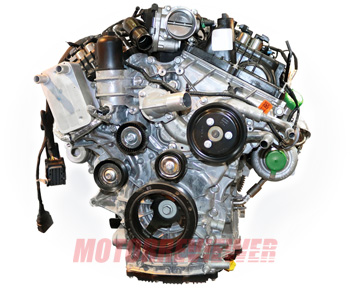
3.0L EcoBoost Engine Info
The Ford 3.0L EcoBoost () is a 3.0-liter gasoline twin-turbocharged direct-injection (GTDI) V6 engine from Ford Motor, which was released in 2016. Like the 2.7L EcoBoost, the 3.0-liter version is part of the "Nano" series (a compact, high-performance twin-turbo V6 engine series from the Ford EcoBoost family). In the beginning, this engine was commonly used in high-performance Ford and Lincoln midsize and full-size cars and SUVs, such as the Explorer ST, Aviator, and Bronco Raptor. But for now, the EcoBoost 3.0 is gradually replacing the 3.7 Ti-VCT Cyclone V6 engine in various Ford vehicles, including the Ford Police Interceptor Utility (FPIU). So let's see what's inside it, learn its features, reliability, pros and cons.
3.0L EcoBoost Engine Design
The 3.0-liter engine is heavily based on the EcoBoost 2.7L Nano. It also uses the 60-degree CGI-block (Compacted Graphite Iron), which is reinforced by a die-cast aluminum ladder frame block skirt. The cylinder bore was increased from 83.0 mm to 85.4 and the piston stroke from 83.0 mm to 86.0. The 3.0 EcoBoost engine also features an integrated front cover (IFC), a wet-belt driven oil pump (electronically controlled), and forged everything inside (a forged-steel crankshaft, forged-steel connecting rods, pistons and cams).
Cylinder heads are basically the same. They are aluminum DOHC heads with four valves per cylinder, roller finger followers, and integrated water-cooled exhaust manifolds. There is also Ti-VCT (Twin Independent Variable Camshaft Timing) technology. Camshafts are driven by two timing chains. Each cylinder bank is equipped with an electrically controlled turbocharger. These turbos send compressed air through an air-to-air intercooler and into the plastic intake manifold. The 3.0 EcoBoost is direct injection only vs port+direct for the second gen 2.7 and 3.5 EcoBoosts. Also the 3.0-liter version has a 9.5:1 compression ratio, while the 2.7 engine has a very high 10.3:1 ratio.
Performance
The 3.0L EcoBoost V6 engine produces 350-418 horsepower at 5,500-5,700 RPM and up to 430 lb-ft (583 Nm) of torque in a range of 2,750-3,500 RPM. A plug-in hybrid variant of the 3.0 EcoBoost is also available on the 2020+ Lincoln Aviator. The total power and torque with added electric motors is 494 hp at 5,500 rpm and 630 lb-ft (854 Nm) at 3,000 rpm.
Engine Specs
Oil recommendations and capacity may vary depending on the car model, year, and market. Please check the service manual specific to your vehicle!
Ford 3.0L V6 EcoBoost Reliability and Problems
First of all, the 3.0L EcoBoost V6 is generally reliable and is built to withstand high loads and abuse. However, like other EcoBoost engines, it faces some common problems, such as carbon build-up, and some of these can cause engine failure.
Intake Valve Fracture
The 2.7L and 3.0L V6 EcoBoost engines (2021-2022 Bronco, Explorer, Aviator, etc.) have been subject to recalls due to potential engine valve issues. Faulty intake valves can fracture, and drop into the cylinder, catastrophic engine damage.
Carbon Buildup
The 3.0 EcoBoost is a direct-injection (no port injection) engine. For this reason, the intake valves may experience carbon buildup over time, which restricts airflow and leads to rough idling, reduced performance and decreased fuel economy.
Oil Leaks and Coolant Loss
Oil and coolant leaks are a common issue in every engine, and the 3.0 EcoBoost is no exception. Most often, oil leaks from the valve covers and the oil pan gasket. Common sources of coolant loss include worn radiator hoses, damaged water pumps, or cracked plastic reservoirs. Low coolant levels can cause engine overheating and engine failure.
Wet Belt Issues
A "wet belt" system means the belt runs in oil. With time, these belts may deteriorate, which could cause engine damage if they are not replaced at the recommended intervals.
Cam Phaser Issues
Some 3.0 EcoBoosts (found in 2021-2024 Ford Explorer ST, Bronco Raptor) had premature cam phaser failure, resulting in a distinctive diesel-like rattle on cold start.
Reliability Summary
The 3.0L EcoBoost V6 engine is generally considered to be reliable and robust. There are already many vehicles with over 100,000 miles on them without any engine problems. However, proper care is essential for longevity. All EcoBoost engines require strict adherence to oil change intervals and are sensitive to the quality of oil and fuel. The lifespan expectancy is 150,000 to 200,000+ miles.