
Toyota 1GD-FTV 2.8D Engine Specs, Problems, Reliability, Info
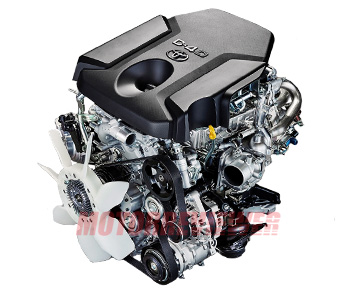
Toyota 2.8L 1GD-FTV Diesel Engine Info
The latest Toyota’s diesel engine series, named GD, was released in 2015 to replace the old KD family. It is the most widespread four-cylinder diesel engine produced by Toyota, and the 1GD-FTV became the replacement for its predecessor, the 3.0L 1KD-FTV. The new 2.8-liter diesel was first used in the Toyota Land Cruiser Prado, and later in other popular SUVs such as the Toyota Fortuner and Hilux.
2.8D 1GD-FTV Design Features
The 1GD-FTV has a traditional cast-iron cylinder block without liners. Like the 1KD, it also has two counter-rotating balance shafts. These are located in a separate housing underneath the engine block, and are driven by a chain from the crankshaft. In some engine versions (such as in the Toyota Hilux), there is no balancing unit to reduce costs.
The cylinder head is made of aluminum alloy. It has 4 valves per cylinder (two intake and two exhaust valves), or 16 total valves. The new head has improved intake airflow and a better shape for combustion chambers. At the top of the head, there are 2 chain-driven camshafts (one for intake and one for exhaust). The crankshaft isn't directly connected to the camshafts, but instead, the 8.0-pitch timing chain drives the crankshaft via a sprocket connected to a high-pressure fuel pump. A single-row, 9.525-pitch roller chain drives the high pressure pump. The valves are operated by roller rocker arms equipped with hydraulic lifters.
The GD engines are equipped with a Common Rail direct fuel injection system. The pressure in the system is between 35 and 220 MPa (5,000 and 32,000 psi). These impressive numbers are achieved thanks to the high-pressure HP5S type pump. All the components of the fuel system are manufactured by Denso. 1GD engines are also equipped with variable nozzle turbine (VNT), also known as variable geometry turbine (VGT), and air-to-air intercooler. Intake manifold also has valves that close and open one of two intake ports for each cylinder, improving combustion. Throttle body is electronically controlled, with throttle valve driven by an electric motor.
Depending on the market location and emission standards, the engine has different systems for reducing emissions. The full list includes EGR, DOC, DPF and SCR. Compared to its predecessor (1KD), the new engine turned out to be 15% more fuel-efficient and has 25% more torque. According to Toyota's estimates, the thermal efficiency of the new engine is 44%.
Engine Specs
Oil recommendations and capacity may vary depending on the car model, year, and market. Please check the service manual specific to your vehicle!
2.8D 1GD-FTV Engine Problems and Reliability
The 2.8-liter 1GD-FTV engine is considered a reliable, strong, and technologically advanced diesel engine. However, the series has some notable issues with Diesel Particulate Filter (DPF) and timing chain's lifespan.
DPF Clogging
Early versions often had problems with DPF filters clogging, especially when driving short distances in the city. Post-2021 models feature updated software, making burn-off cycles more aggressive and reliable.
Timing Chain Rattle
1GD timing chain is not strong. Early production engines experienced a noticeable timing chain rattle already at first 20,000-30,000 miles. The timing chain suffered from oil starvation due to the incorrect angle of the oil tube nozzle used for chain lubrication. Later models received an upgraded tube, which significantly extended the timing chain lifespan.
Valvetrain Longevity Issue
Rockers and camshafts wear out too quickly and rarely last more than 100,000 miles.
EGR Problems
Owners often report problems that occur due to the EGR system. The main problem is carbon build-up in the intake manifold, which over time leads to performance reduction.
Fuel System Wear
Denso Common Rail components do not like low-quality fuel. Bad diesel fuel can quickly kill the high-pressure fuel pump and direct injectors.
Glow Plugs Failure
There are numerous cases where the working part of the glow plug has fallen apart inside the cylinder.
Toyota 2.8L 1GD-FTV Engine Longevity
Although the early models had some serious reliability problems, the latest upgraded versions seem to be pretty solid. It is also worth noting that this modern engine still uses a robust cast-iron block, and with proper and regular maintenance, it can serve hundreds of thousands of miles before needing major repairs. The Toyota 1GD-FTV 2.8L diesel engine typically lasts up to 200,000 (300,000 km), though well-maintained units easily push past 250,000 miles (400,000 km).