
GM 4.8L LR4 Vortec Engine Specs, Problems, Reliability, Info
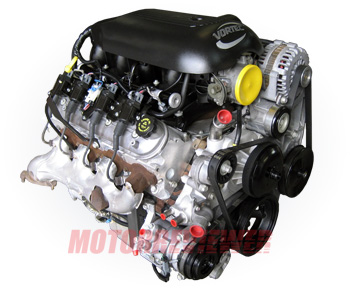
4.8L V8 Vortec 4800 Engine Info
The GM LR4, also known as the Vortec 4800, is a naturally aspirated 4.8-liter Generation III small block V8 gasoline truck engine introduced first in 1999, along with the 5.3-liter LM7 and 6.0-liter LQ4 engines. This robust V8 motor with an iron block (first LS truck engine) was available until 2007 and was used in many popular Chevrolet and GMC pickup trucks, SUVs, and vans, such as the Silverado/Sierra 1500, Tahoe/Yukon, and Express/Savana 2500/3500. So let's take a look at how this engine is built, learn its specifications, features, reliability, and the most common problems.
GM LR4 Vortec 4800 Engine Overview
The LR4 engine uses a strong cast iron cylinder block with a 90-degree cylinder angle, a 4.400-inch bore spacing and 6-bolt main caps. It came with a cast iron crankshaft, 6.098 inch-long forged powdered-metal I-beam connecting rods, and flat-top cast aluminum pistons. The LR4 is a traditional pushrod V8 engine, so it has a single hydraulic-roller camshaft inside the block, steel pushrods, roller rocker arms and OHV heads with two valves per each cylinder.
Cylinder heads are made of aluminum alloy, and they feature "cathedral" intake ports, oval exhaust ports, and a 15-degree valve angle. Intake valve diameter: 1.890 inches (48 mm). Exhaust valve diameter: 1.550 inches (39.4 mm). Both intake and exhaust valves are made of steel and have solid stems. The stock LR4 camshaft has the following specs: 191/190 duration (intake/exhaust), 0.457 in./0.466 in. valve lift (intake/exhaust), 115.5 (1999) or 114 (2000-06) degrees lobe separation angle. In 2001 the engine was upgraded with MLS (multi-layer steel) gaskets.
The engine is equipped with an electronic sequential multi-port fuel injection system. The 1999-2003 LR4 had a return-style system, and went returnless in 2004 (except the Express van). The intake manifold is made of composite material and is fitted with a 78mm 3-bolt throttle body. 1999–2002 models came with a cable-operated throttle, while the most 2003+ models have drive-by-wire throttle control. The coil-near-plug ignition system features electronic control with a 24X crankshaft position encoder.
The original 1999 Vortec 4800 LR4 engine was rated at 255 hp and 285 lb-ft (386 Nm) of torque, but later models made between 270-285 hp and up to 295 lb-ft (400 Nm) of torque. The LR4 was discontinued in 2007 and replaced by a fourth-generation small block V8 engine, the LY2/L20 (VVT+AFM).
Engine Specs
St. Catharines, Ontario, Canada
Oil recommendations and capacity may vary depending on the car model, year, and market. Please check the service manual specific to your vehicle!
Vortec 4800/LR4 V8 Engine Reliability
Iron block 4.8L Vortec engines are highly reliable and durable. Unlike later Vortec 4800 models, the LR4 does not incorporate Active Fuel Management (AFM) or Variable Valve Timing (VVT), which are known to cause problems with oil consumption and valve lifters. This engine has very strong internal components, but some parts, such as ignition coils, water pump, fuel pump, intake knock sensor, and intake and exhaust manifold gaskets, may need to be replaced over the engine's life.
The Most Common Problems
- Faulty knock sensor: The fault code is P0332 (and others). The most common symptoms are cylinder misfires, rough and poor acceleration, poor fuel economy, and a knocking or pinging sound coming from the engine.
- Water pump failure: A faulty water pump often produces squeaking noises or causes engine coolant to leak. Slow coolant flow can also cause engine overheating.
- Intake manifold cracks: Gen III LS engines came with a weak plastic intake manifold prone to cracking. It is not strong enough to withstand the heat and vibrations of the operating environment, and may develop cracks over time. These cracks cause air leaks, which lead to rough idling, stalling, and power loss. A bad gasket can also cause air leaks.
4.8L Vortec LR4 Longevity
The GM 4.8L LR4 engines are generally considered strong and reliable workhorses. Lack of some modern features, like GM’s cylinder deactivation system AFM or VVT, makes them even more durable. Of course, no engine is immortal, and problems will occur over time. Age-related issues are common to any high-mileage engine. But with good care and proper maintenance, regular oil changes, high-quality motor oil, filters, and parts, these 4.8L Vortec engines can usually last 250,000-300,00 miles.