
Mitsubishi 4B12 2.4L Engine Specs, Problems, Reliability, Info
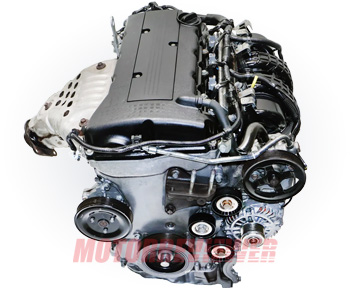
2.4L 4B12 Engine Info
The 4B12 is a naturally aspirated, four-cylinder, all-aluminum, 2.4-liter gasoline engine produced by Japanese car manufacturer Mitsubishi Motors since 2007, replacing the previous 4G69 engine from the 4G6 series. The 4B12 engine was developed jointly by Mitsubishi, Hyundai-KIA and Chrysler. Each company has its own version: G4KC/G4KE for Korean models and ED3 for some Chrysler products. The 4B12 engine was used mostly in mid-size crossovers and vans, such as the popular Mitsubishi Outlander, Citroen C-Crosser and Peugeot 4007, and Mitsubishi Delica. Let's briefly take a look at the design of the inline-four power unit and learn about its specifications, features, pros and cons.
Mitsubishi 4B12 2.4 Engine Overview
The 4B12 engine is based on a lightweight aluminum cylinder block with cast iron liners. It features an open cooling jacket and a balancing shaft module installed along with an integrated oil pump. A 16-valve DOHC die-cast aluminum cylinder head is mounted on the top of this engine block. The 4B12 engine comes with a silent timing chain and MIVEC variable valve timing on both intake and exhaust valves (2011+ models have MIVEC only on the intake). The valve train is equipped with solid valve buckets, so manual valve adjustment is necessary over time. The cylinder head is covered with a plastic valve cover.
The fuel system is a time-tested electronic multipoint injection (MPI) system: it uses four fuel injectors installed before the intake valves, and regular fuel pump located inside the fuel tank. The intake manifold is made of plastic material and features a fixed geometry (no complicated devices or valve modules). The throttle body is electronically controlled. The ignition system is also modern, controlled by the ECU and comes with individual coils for each spark plug. In this configuration, the 4B12 produces up to 170 horsepower and 167-171 ft-lb (226-232 Nm) of torque.
In 2013, Mitsubishi Motors introduced a replacement called the 4J12, which features SOHC heads, continuous Variable Valve Lift (VVL), and MIVEC. Despite this, the manufacturer still uses the 4B12 engine in some markets.
Engine Specs
Oil recommendations and capacity may vary depending on the car model, year, and market. Please check the service manual specific to your vehicle!
Mitsubishi 2.4L 4B12 Engine Problems and Reliability
The Mitsubishi 4B12 is a simple, reliable, and, most of the time, trouble-free engine. However, nothing is perfect in the real world and it also has some weaknesses.
Oil Consumption
Some excessive oil consumption may occur after 120-150,000 miles. This happens because the aluminum open-deck cylinder block is not very strong and, over time, it loses its geometry (cylinders take on an elliptical shape). This is a common problem for many engine blocks with an open cooling jacket.
Timing Chain Stretch
The timing chain is not durable in this engine. The chain can stretch and require replacement after only 100,000 miles. A faulty chain can cause serious wear on the phase shifter's sprockets, requiring costly repairs.
Loud Operation
There are many complaints about the noisy operation, knocks and vibrations, but this is quite normal for the 4B12. However, most of the time, the loud operation is a symptom of out-of-spec valve clearances. People just forget to check and adjust the valve clearances, which over time causes a loud tapping sound.
Reliability Summary
The Mitsubishi 4B12 2.4L MIVEC is a straightforward, naturally aspirated workhorse, widely considered as a reliable and durable engine that can last over 200,000 miles with proper regular maintenance. But still, this is a modern engine with electronics and an aluminum cylinder block that can develop specific issues at high mileage, including cylinder wear and increased oil consumption.